Interview: BAKKIS on Why Trusting Your Taste Still Matters
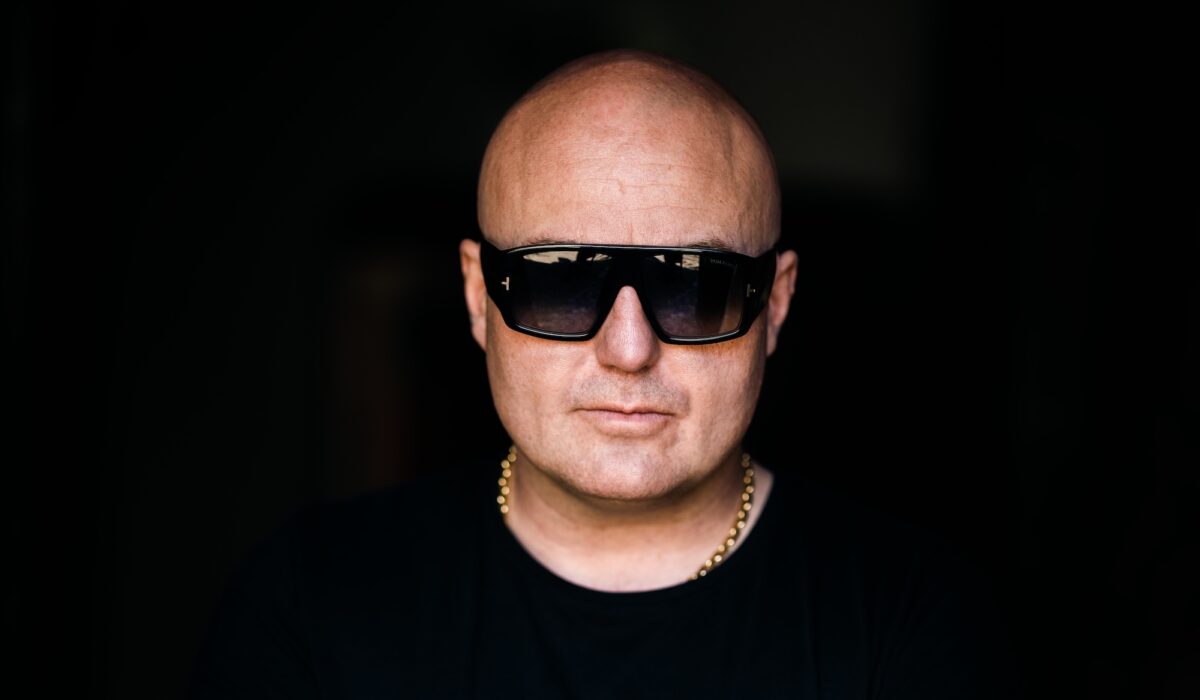
Norwegian producer BAKKIS has spent much of his life around house music, from his early days in radio and years behind the decks to his more recent work as a producer, label owner and A&R.
His latest single, ‘Another Day’, returns to his Okada Records imprint with a deeper, more reflective take on his sound, balancing club weight with melody and a sparse vocal. In this interview with iHouseU, BAKKIS traces the track back to an unlikely starting point by the pool at Pikes, discusses learning when to leave space in his productions, the evolving identity of Okada, his work developing artists through R-TRYBE and why his own taste in house music has become less commercial over time.
You started out in radio, then spent years DJing before releasing your own tracks. Is there a particular record you remember playing that changed your idea of what house music could do?
Everything But The Girl – Missing, the Todd Terry remix, is one that comes to mind. I remember playing that record a lot, and it showed me quite early how house music could be emotional and still work incredibly well on a dancefloor. What I love about that remix is that Todd Terry didn’t lose what made the original song special. The vocal and emotion are still completely there, but he put this house groove underneath it that gave the record a totally different life. I think records like that probably influenced my taste more than I realised at the time. I’ve always liked the idea that house music doesn’t have to be one thing. It can have groove and energy but still have melody, emotion and a proper song at the centre of it.
Another Day has some force behind it, but the vocal gives it a more reflective feel. Where did the track begin, and did you know early on that it would have both sides?
Another Day actually started by the pool at Pikes in Ibiza. I had my Ableton Move with me and started with the drums and groove, then the bassline and the early melodic elements. Most of the musical identity of the track came together in that first session. Initially I thought it was going to become more of a groovy house record. But then I started testing those pads and as soon as they came in, I just felt I had to follow that direction. They completely changed the atmosphere of the track and brought out this more melodic and reflective side that I hadn’t really planned. The vocal came later when I was back working on the track in Ableton, and that pushed that feeling even further. It’s a very simple vocal, but it added another layer of emotion without taking away the groove and energy that were already there. That’s quite typical of how I like to work. I might have an idea of where a track is going, but if something happens that changes the feeling of it, I’d rather follow that than force it back towards the original plan.
When you played an early version of Another Day, what did you learn that you couldn’t hear in the studio? Or have you stopped using the dancefloor as the final test for every track?
I actually didn’t test Another Day in a club before finishing it. I don’t play regularly enough at the moment to use the dancefloor as the final test for every record I make, so I’ve had to learn to trust what I’m hearing in the studio more. But to be honest, I don’t really see Another Day as only a club record anyway. For me, it can work just as well as a listening track, by the pool or in a completely different setting. Maybe that makes sense considering it started by the pool at Pikes. Of course, when I do get the chance to play unfinished music out, it’s incredibly useful. A club system and a room full of people can tell you things that are difficult to hear in the studio, particularly about the groove, energy and arrangement. But I don’t think every record needs to be judged purely by what it does on a dancefloor. Sometimes the feeling it creates somewhere else can be just as important.
You’ve said you’re making more space in your productions. That sounds simple until you’re sitting with a nearly finished arrangement. What did you have to leave out of Another Day to make it work?
With Another Day, it was actually more about taking things away than adding anything new. The early version had more repetition in the vocal, and after living with it for a while I realised I was using it too much. Once I removed some of those repetitions, the vocal became more effective when it did appear. I also cut back the pads quite a bit. They’re an important part of the atmosphere of the track, so it was tempting to let them play more, but I think they became more powerful once there was more space around them. That’s probably what making more space means to me at the moment. It’s not necessarily about making minimal music or having fewer sounds. It’s about not feeling that every element needs to be doing something all the time.Taking something away makes you notice it much more when it comes back.
Your Okada releases have moved through different shades of house, from the rawer Inna Fire to the deeper sound of this single. How wide can the label’s sound stretch before you’d feel it had lost its identity?
Okada originally started as an outlet for my own music, so I never wanted to define it too narrowly in terms of genre. My own taste moves around within house music, and I think the label should have the freedom to reflect that. Inna Fire and Another Day are quite different records, but to me they can still sit on the same label because they both reflect me and my taste. I’d rather the identity of Okada come from the taste behind the releases than from every record having to fit into exactly the same subgenre. I definitely see myself releasing other artists on Okada further down the line as well. When that happens, I think the same approach will apply. It doesn’t necessarily have to sound like something I would make myself, but it has to be something I genuinely connect with and feel makes sense within the world of the label. So I think Okada can stretch quite far. I’d probably only feel we’d lost the identity if I started releasing music because I thought it fitted a trend or a certain market rather than because I genuinely believed in the record.
Running Okada means making decisions about other people’s music as well as your own. Has hearing a track you believed in struggle to find an audience, or one you were unsure about take off, changed how you judge a demo?
My experience as an A&R is still relatively limited, and most of it has been through R-TRYBE Records rather than Okada. Okada has mainly been an outlet for my own music so far. But I would probably say no. I don’t think seeing one record perform better or worse than expected should fundamentally change how you judge the next demo. There are so many factors that determine whether a record finds an audience that aren’t necessarily about the quality of the music. Some records can also take a while to blossom. Just because something doesn’t connect immediately doesn’t mean it won’t find its audience later. We’ve all seen records suddenly start moving months or even years after they were released.
At some point you have to trust your own taste and believe in your ability to recognise something you connect with. Of course you learn from every release, and I’m still learning all the time, but I wouldn’t want to start second-guessing every decision based purely on numbers or how the previous record performed. For me, if you start chasing what you think people want rather than trusting what you genuinely believe is good, that’s probably when you begin to lose your identity.
Through R-TRYBE, you’re helping producers develop their work. What’s a piece of advice you give regularly but still find difficult to follow yourself?
Probably knowing when to stop adding things. It’s something I say regularly through R-TRYBE: you don’t always need another element, another section or more of the vocal just because there’s space for it. I still catch myself doing exactly the same thing. When you’ve worked on a track for too long, it’s easy to lose perspective. That’s why it’s important to have a few people you trust to give you honest feedback and challenge your decisions. Sometimes you just need someone with fresh ears to point out what should have been obvious to you.
Between making music, running a label and working with other artists, where do you feel your own taste has changed most over the past year? Give us a record you might have passed over a few years ago that you’d play now.
I’d probably flip that question slightly. There are more records I would have played a few years ago that I probably wouldn’t play now than the other way around. I think my taste has become a bit less commercial. I’m probably less drawn to something just because it has an obvious hook or an immediate impact, and more interested in records with character, groove or something slightly unexpected about them. Working with more music and hearing so much unfinished music through R-TRYBE has probably contributed to that as well. The more you listen, the more you start looking for things that feel a little different rather than something you’ve already heard many times before.