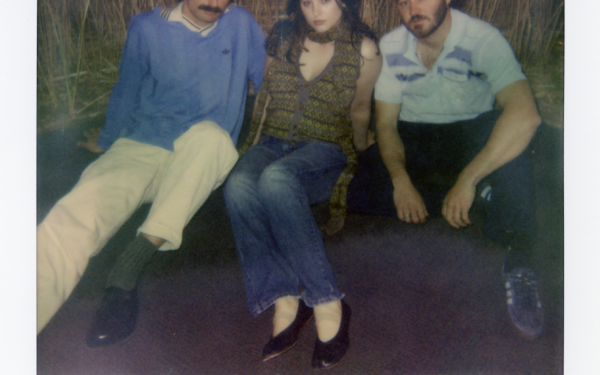
Melody Briar ‘The Intangible Man’ – out now!

Melody Briar’s “The Intangible Man” is a quietly devastating meditation on what remains after a person has ceased to be physically present. Built from the fragile architecture of grief, the song considers the strange metamorphosis by which someone once vivid and tangible becomes memory, anecdote, image, and eventually something closer to myth. Briar approaches this transformation without theatrical excess. Instead, she allows the emotional weight of absence to gather gradually, creating a song whose power lies as much in its restraint as in its sorrow.
Her classical background is perceptible not as ornament, but as an underlying sense of composition and proportion. Piano, voice, sweeping strings, textured acoustic guitar, and atmospheric production are woven together with a sensitivity to space and emotional pacing. The arrangement possesses a cinematic quality, but it never overwhelms the intimacy of the writing. There is a careful balance between the private room and the vast landscape, as though Briar is placing an intensely personal memory within the larger acoustics of human experience.
Lyrically, “The Intangible Man” is especially compelling in its examination of remembrance. Grief here is not presented as a simple passage from pain toward resolution. It is more elusive than that, a continual negotiation with the changing shape of the dead. The person we mourn gradually becomes inseparable from our own recollection of them, and Briar captures the unsettling beauty of that process with considerable emotional intelligence. Her writing understands that memory can preserve, distort, comfort, and wound simultaneously.
What distinguishes Briar from many contemporary alternative singer-songwriters is the sense that her music has been informed by genuine musical study as well as lived experience. There are echoes of the atmospheric intimacy associated with artists such as Phoebe Bridgers and Lana Del Rey, alongside a more classical instinct for texture and emotional architecture. Yet “The Intangible Man” never feels like an exercise in stylistic resemblance. Its identity comes from Briar’s willingness to let vulnerability remain complicated rather than packaging it into easy catharsis.
As a glimpse into the forthcoming Green Aventurine, the single suggests an album deeply concerned with impermanence, love, mortality, and the difficult work of continuing after loss. “The Intangible Man” does not attempt to make grief beautiful in any simplistic sense. Rather, it finds beauty in the act of looking closely at what grief does to memory and identity. Briar emerges as a songwriter with an unusually contemplative sensibility, one capable of turning private mourning into something expansive, resonant, and profoundly human.