Talon David ‘Villian’ – out now!

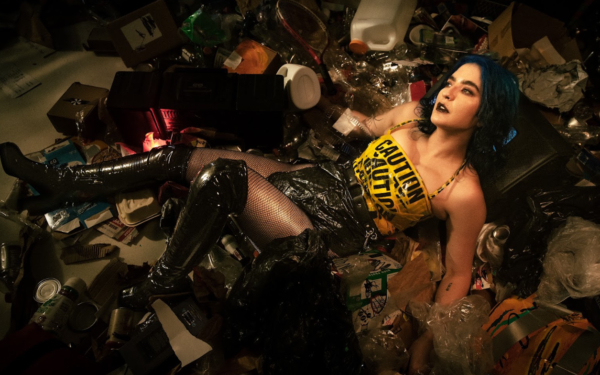
There is a certain delicious contradiction at the heart of Talon David’s Villain. An album about being misunderstood is itself gloriously difficult to pin down. Across eleven tracks, the Nashville-born, UK-based artist moves between alt-pop, neo-soul, alternative rock, funk, house, retro R&B and dark pop, treating genre less as a boundary than as another character in the story. The result is theatrical without being overly precious, personal without becoming confessional for confession’s sake.
The album begins with “Make Me the Villain,” a slow-burning confrontation born from David’s experience of being scapegoated within the music industry. It establishes the record’s central tension: what happens when standing up for yourself makes you the antagonist in somebody else’s narrative? David does not spend the rest of the album trying to answer that question neatly. Instead, she inhabits its contradictions, moving through anger, humor, grief, loneliness and eventual liberation.
That theatricality is one of Villain’s greatest strengths. “Awkward” turns romantic discomfort into something charmingly absurd, while “Hero Is a-Slitherin’” transforms a Hogwarts House into an unexpectedly sharp meditation on identity and stereotyping. “Ghosted” is all rhythmic confidence, converting professional frustration into a funk-driven shrug. These songs feel like scenes rather than isolated tracks, each one adding another shade to David’s central character.
The emotional depth arrives most powerfully on “Mosaic (All of You),” where the bravado falls away. Piano carries the song as David confronts loneliness and the desire for connection, eventually building toward a vocal climax that gives the album its emotional center. “Inner Banshee,” written during a period of grief following her grandmother’s death, offers another glimpse behind the theatrical curtain. Suddenly the villain is simply a person trying to keep creating.
David’s complete involvement in the record gives Villain a strong sense of authorship. She wrote, produced, arranged, engineered and performed the project, while a supporting cast of musicians expands its instrumental world. The album’s biggest achievement, however, is conceptual rather than technical. David takes a label intended to diminish her and turns it into a creative playground. By the time “Last of My Kind” arrives, she is no longer interested in proving she is the hero. She has discovered something much more useful: she gets to write the story.